Retrofit insulation
Add insulation to existing walls and attics without tearing anything out - the natural next step after air sealing to complete your home's thermal barrier.
Learn More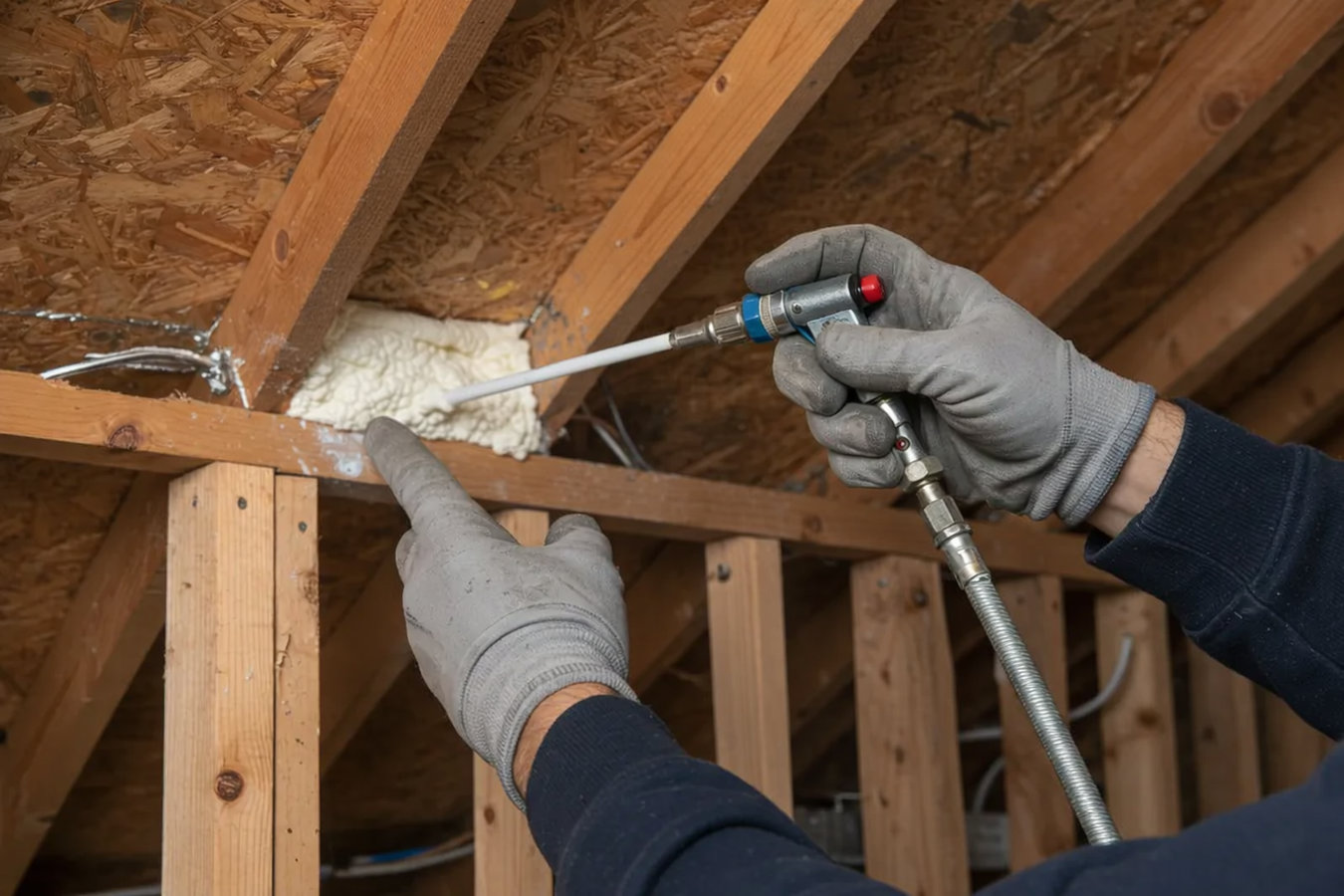
Your attic floor is full of gaps that let 140-degree air pour into your living space all summer. Professional attic air sealing closes every one of them so your AC can finally keep up.
Attic air sealing in Imperial, CA closes every gap, crack, and penetration in your attic floor using foam, fire-rated caulk, or rigid board - blocking the path that lets superheated attic air flow directly into your living space, with most single-family home jobs completed in a single day.
If your air conditioner runs for hours but your upstairs rooms never really cool down, the problem is often not the equipment. Imperial sits in Climate Zone 15 - one of the hottest designations in the country - and attic temperatures in July regularly reach 140 to 150 degrees. Every gap around a recessed light, pipe chase, or attic hatch is an open path for that heat. Attic air sealing in Imperial closes those paths systematically, so your cooling system is no longer fighting a constant flood from above.
Air sealing is most effective when paired with retrofit insulation - sealing the gaps first, then adding insulation on top, gives you the full thermal barrier your home needs. Many Imperial homeowners who come to us for air sealing end up doing both in the same visit, saving time and getting a better combined result.
In Imperial's extreme heat, an AC system that never seems to catch up is often fighting superheated air pouring in through the attic floor. If your system runs for long stretches without reaching your set temperature, the problem may not be the equipment - it may be the unsealed gaps overhead. This is one of the clearest signs that your attic floor is working against you.
The Imperial Valley's dry, sandy winds push fine particles through every opening they can find. If dust appears quickly on furniture and countertops - especially after windy days - there is a good chance it is entering through gaps in the attic floor. Sealing those gaps can make a noticeable difference in how clean your home stays and in the air quality inside.
Some seasonal increase is normal, but a dramatic jump in June, July, and August - especially if your home is not large - often points to a poorly sealed attic. When attic temperatures hit 140 to 150 degrees and nothing stops that heat from flowing into your living space, your cooling costs reflect it. Comparing your summer bills to your winter bills gives you a rough sense of how much the attic is costing you.
If bedrooms or any room directly below the attic feel significantly warmer than the rest of the house, heat is almost certainly transferring through the ceiling. This pattern is especially common in older Imperial homes where the attic was never sealed. It is not just uncomfortable - it means your AC is working harder to compensate, which shows up in your bill every month.
Every attic air sealing project starts with a thorough inspection of your attic floor - not a quick glance from the hatch. We work through the space systematically, identifying every gap around recessed lights, plumbing and electrical penetrations, top plates, the attic hatch, and any ductwork that passes through. Spots near chimneys or large plumbing chases get fire-rated materials rather than standard foam - the right material in the right place matters for both safety and durability. When the sealing is complete, we do a final walkthrough and provide photos of the key areas so you can see exactly what was done.
For homeowners who want the most complete thermal upgrade, attic air sealing pairs naturally with whole-home air sealing services that address gaps throughout the building envelope - not just the attic floor. Combining both services in one visit reduces labor costs and gives you a more complete result. We can also coordinate with your insulation work so the sealing is done before any new material goes on top.
Comprehensive sealing of every gap, penetration, and opening in the attic floor - suited to homes that have never been air sealed or were built before 1990s energy standards.
Focused sealing of specific problem areas - recessed lights, pull-down stairs, plumbing and wiring chases - for homes that need spot treatment rather than a full sweep.
Weatherstripping and insulating the attic access point, which is one of the largest single air leaks in most homes - well-suited as a standalone job or add-on to other work.
Sealing performed as the first step of a larger insulation installation - the most effective sequence for homeowners adding or upgrading attic insulation at the same time.
Imperial sits in the Imperial Valley, one of the hottest regions in the United States, and summer temperatures regularly exceed 110 degrees. Attic temperatures on a July afternoon can reach 150 degrees or more - meaning every gap in your ceiling is a direct path for that superheated air to pour into your living space. Attic air sealing matters more here than in almost any other California climate zone because the temperature difference between your attic and your living area is so extreme. Homeowners in El Centro and surrounding communities deal with the same conditions, and the same sealing work delivers the same dramatic difference in comfort.
A significant portion of Imperial's housing was built before the 1990s, when building codes required far less insulation and air sealing than they do today. Older homes in the area often have attics that were never sealed at all - just insulation laid over a leaky ceiling. The Imperial Irrigation District, which serves most Imperial households, also offers energy efficiency rebates that can reduce the net cost of air sealing work. Homeowners in Heber and other IID-served communities can benefit from the same programs when combining air sealing with insulation upgrades. A contractor familiar with IID programs can help you apply and document the work correctly.
Call or submit a request online and we will ask a few basic questions about your home - age, whether you have noticed high bills or uneven temperatures, and the attic access situation. We respond within 1 business day and can usually schedule an in-home visit within a few days. There is no commitment required at this stage.
A technician goes up into the attic to check the size of the space, how much existing insulation is present, and where the gaps are. This visit usually takes 30 to 60 minutes. A good contractor walks you through what they found before they leave, then follows up with a written quote that explains the scope, materials, and total cost clearly.
The crew works through the attic systematically, applying foam, caulk, or other sealing materials to every gap. For most Imperial homes this takes four to eight hours. You do not need to leave - the work happens entirely overhead. Drop cloths protect your floors and walls near the access point, and the crew cleans up before they go.
Before the crew leaves, a lead technician walks you through what was done - with photos of the key sealed areas. You receive a written record of the work, which is useful for any IID rebate application or future home sale. If you are combining this work with insulation, we coordinate so the sealing is verified complete before insulation goes on top.
Free estimate - no obligation. We respond within 1 business day.
(760) 483-7473Poor air sealing work often means foam on the most visible gaps while smaller openings around wiring, recessed lights, and top plates are left open. We work through every penetration systematically and show you photos of what was sealed - so you know the work was thorough, not selective.
The Imperial Irrigation District offers energy efficiency rebates that can meaningfully reduce your net cost. We are familiar with current IID programs and can help you gather the documentation needed to apply - so you are not leaving money on the table after the job is done.
Standard foam products can degrade under the extreme temperature swings of an Imperial attic. We use materials rated for high-heat environments, and we apply fire-rated caulk around chimneys and large penetrations where building safety standards require it - because the right material in the right place matters in Climate Zone 15.
You receive a written estimate before any work begins, and a lead technician walks you through what was sealed - with photos - before they leave. The Building Performance Institute sets the standard for whole-home energy assessment, and our process follows that systematic approach: every penetration checked, every gap addressed, everything documented.
Imperial Valley homeowners deal with heat that most California contractors have never worked in. We know what 110-degree summers do to a home, and we know how to close the gaps that make it worse. Every attic air sealing job comes with documentation you can use for rebates or when you sell the home.
Add insulation to existing walls and attics without tearing anything out - the natural next step after air sealing to complete your home's thermal barrier.
Learn MoreWhole-home air sealing that goes beyond the attic to address gaps throughout the building envelope, from rim joists to crawl space vents.
Learn MoreImperial temperatures climb past 110 degrees by June - book now while fall scheduling is open and your home is ready before the heat returns.