
Open-cell foam insulation
A lower-density spray foam option suited to interior applications where maximum sound dampening and budget flexibility matter more than vapor resistance.
Learn More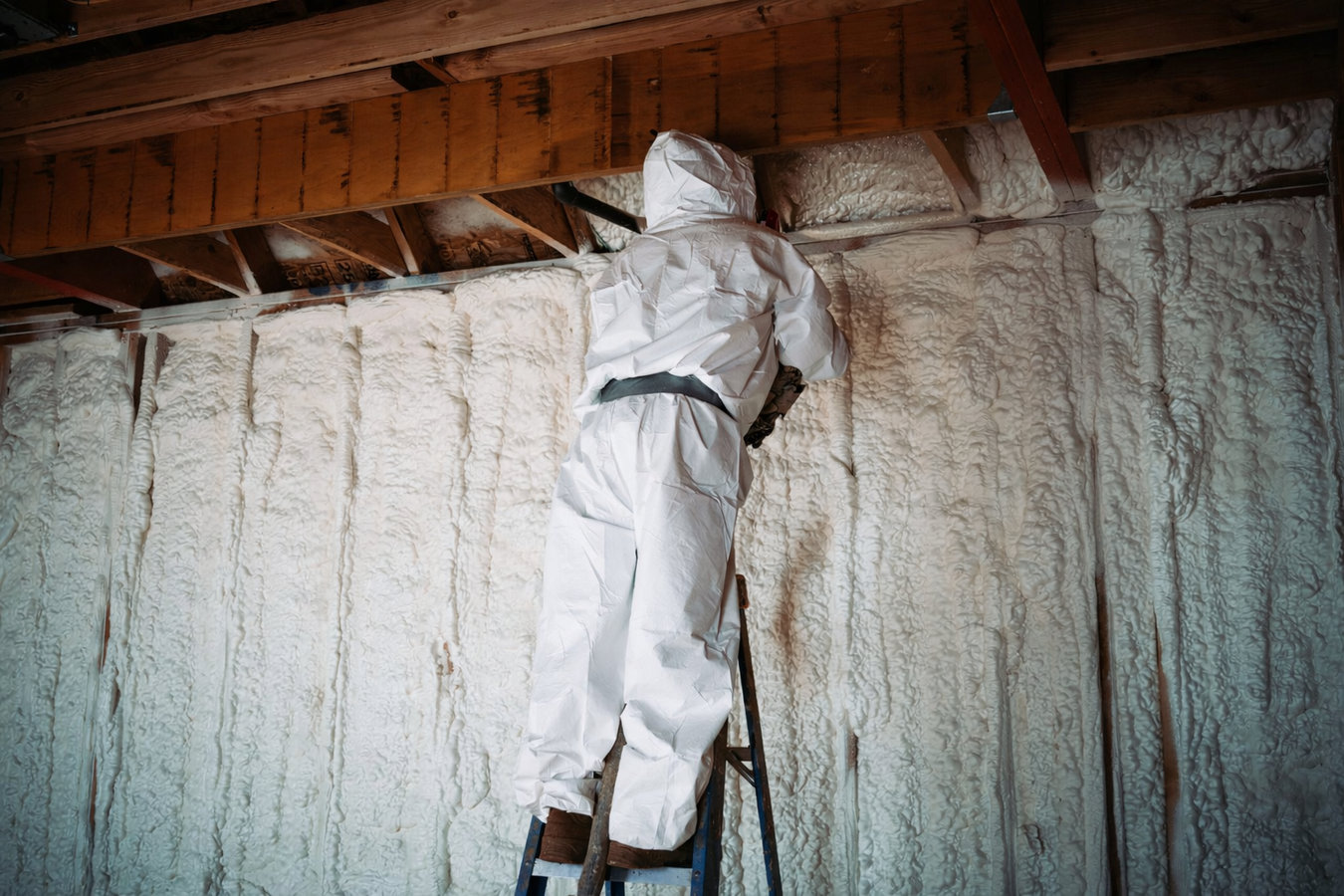
Imperial summers hit 110 degrees and above. Closed-cell foam insulation seals air gaps and creates the densest thermal barrier available - giving your home its best defense against heat in one day of professional installation.
Closed-cell foam insulation in Imperial is sprayed as a liquid that expands and hardens into a dense, rigid barrier inside your walls, attic, or crawl space - it insulates and seals air gaps in one pass, and most residential jobs are completed in a single day.
Unlike fiberglass batts that only slow heat through a cavity, closed-cell foam fills every gap and irregularity it touches. In a place like Imperial, where temperatures regularly exceed 110 degrees from May through October, that complete coverage makes a real difference. Heat finds every opening - gaps around pipes, cracks at framing intersections, thin spots in older batt insulation - and exploits them constantly. Foam eliminates those pathways. It also resists moisture vapor, which matters because temperature swings between Imperial's blazing afternoons and cooler nights can cause condensation inside wall cavities over time. For homeowners exploring the full range of spray foam insulation options, closed cell spray foam is the higher-density choice - it delivers more R-value per inch and acts as a vapor barrier, making it the preferred option for extreme-heat applications.
Foam is a job where experience shows. A crew that has sprayed foam in Imperial Valley homes knows how the desert heat affects curing and coverage. Ask for a free written estimate and local references before you sign, so you know exactly what you are paying for.
Every home in the Imperial Valley runs the AC hard in summer, but if your bills are noticeably higher than neighbors with similar-sized homes, poor insulation is a likely cause. When your attic or walls are not properly sealed, your air conditioner is essentially trying to cool the outdoors - it runs constantly and still cannot keep up.
If one side of your house or a particular bedroom stays noticeably warmer than the rest, that area likely has a gap in insulation or air sealing. In Imperial's heat, a poorly insulated room can feel like a different climate entirely from the rest of the house - even with the AC running.
This is a signal specific to the Imperial Valley's wind and dust conditions. If desert dust is finding its way inside despite closed windows, air is leaking in through gaps in your building envelope - the same gaps that let your cooled air escape. Foam insulation seals those pathways completely.
Hold your hand near an outlet on an outside-facing wall on a hot afternoon. If you feel warmth radiating from it, that wall cavity has little or no effective insulation. This simple test any homeowner can do is a reliable indicator that the wall needs attention before another summer passes.
We install closed-cell foam in attics, wall cavities, crawl spaces, and basement walls depending on where your home needs the most attention. For most Imperial homes, the attic is the highest-priority area - heat enters most aggressively from above, and foam applied to the attic floor or roof deck gives you the highest R-value per inch of any insulation type available. Wall cavity applications are common in older homes where original batt insulation has settled or degraded, and crawl space wall applications pair well with a complete encapsulation job. If you want to compare the closed-cell option against a lower-density alternative, we also install open-cell foam insulation, which costs less per square foot but does not provide the same vapor resistance - something to weigh carefully in a desert climate with significant day-to-night temperature swings.
Every job starts with an on-site assessment and a written estimate. We tell you what we find, what we recommend, and why - before we ask you to commit to anything. If old insulation needs to come out first, we handle removal and disposal. We also pull any permits required by the City of Imperial's Building Division, so you are not navigating that process on your own.
Applied to the attic floor or roof deck, providing the highest R-value per inch and eliminating the air gaps that let summer heat pour in from above.
Injected or sprayed into wall cavities to replace degraded batt insulation - suited to older Imperial homes where the original material has settled or been disturbed.
Applied to crawl space perimeter walls as part of a full encapsulation - blocks heat, moisture vapor, and pest access from below the living area.
The highest-performing option for basement perimeter walls in extreme-heat climates, providing a continuous vapor and thermal barrier against ground heat.
Foam applied to the rim joist and any penetrations around pipes or wiring - often where the biggest air leaks exist in older homes.
We remove and dispose of degraded or pest-affected existing insulation before foam goes in - necessary when old material would otherwise trap moisture or reduce adhesion.
Imperial sits in the Imperial Valley - one of the hottest places in the United States - and the cooling season stretches from late spring well into October. A significant share of the housing stock in Imperial was built before modern insulation standards existed. Many of those homes have little or no effective insulation remaining in their walls and attics, which means the air conditioner is fighting against the building envelope every single day. The Imperial Valley also experiences frequent high-wind events that drive fine desert dust into homes through gaps around windows, doors, and framing penetrations. Closed-cell foam addresses both problems at once - it provides the highest thermal resistance available and seals those infiltration gaps completely. Homeowners in Calexico and Heber face identical conditions, and we serve both areas regularly.
California's Title 24 energy code sets minimum insulation requirements for permitted renovation and new construction work. A contractor who does not know those requirements for Imperial's climate zone is a contractor worth skipping. We stay current on what California requires here, and every job we do is done to that standard or above. That compliance is documented, which protects your investment when you refinance, sell, or pull a future permit. The pool of foam contractors working regularly in the Imperial Valley is not large - calling early, especially before the summer rush begins in April and May, gives you more scheduling options and better pricing.
We respond within one business day. We will ask a few basic questions - the size of your home, what area you want insulated, and whether you have had insulation work done before. You do not need technical details; just describe what you are experiencing and what is prompting the call.
We visit your home to measure the space, check what is already there, and look for any conditions - pest damage, moisture, old insulation that needs removal - that might affect the job. You get a written estimate after this visit, not a phone ballpark. No work is scheduled until you approve the estimate.
We confirm whether a permit is required and handle the application if one is needed. Before installation day, you will need to clear the work area - move stored items, and remove pets, plants, and uncovered food. You and your family will need to be out of the home for approximately 24 hours after spraying while the foam cures.
The crew mixes and sprays the foam on-site. Most residential jobs are completed in a single day. Once you return home, walk the treated areas with us or review the photos we provide - look for even, consistent coverage with no visible gaps. We give you documentation of the materials installed and any permit inspection results.
Free on-site estimate, written quote, no obligation. We respond within one business day.
(760) 483-7473We have sprayed foam in Imperial Valley homes for years and know how the desert heat affects curing and coverage. In a small market like Imperial, experience with this specific climate is the single most important thing to look for before you sign.
The Spray Polyurethane Foam Alliance sets the industry standard for safe installation and re-entry procedures. We follow those protocols on every job - including clear re-entry times communicated to you in writing before the crew starts. Your family's safety during and after installation is not a variable.
You will never receive a verbal quote and a surprise invoice. After our on-site assessment, you get a written estimate covering materials, labor, and any permit fees. Work does not begin until you have reviewed and approved it. That is a commitment we make to every homeowner we work with.
Imperial sits in California Climate Zone 15, one of the most demanding climate zones in the state for energy efficiency standards. We know what the current Title 24 requirements are for this zone and spec every job to meet or exceed them - which means your work is compliant when you sell or pull future permits.
The U.S. Department of Energy and the Spray Polyurethane Foam Alliance both recognize closed-cell foam as one of the most effective insulation methods available for high-heat climates. When you combine that performance with an experienced contractor who knows Imperial's specific conditions, you get a result that holds up for the life of the building - not just a season.
A lower-density spray foam option suited to interior applications where maximum sound dampening and budget flexibility matter more than vapor resistance.
Learn MoreLearn more about spray foam as a category - covering both closed-cell and open-cell applications for attics, walls, and crawl spaces throughout the Imperial Valley.
Learn MoreImperial's cooling season starts early and runs long - getting closed-cell foam in now means you start summer with a home that actually holds its temperature.